
News & Updates
Groundbreaking Held for PortMiami Future-Ready Perishables Facility
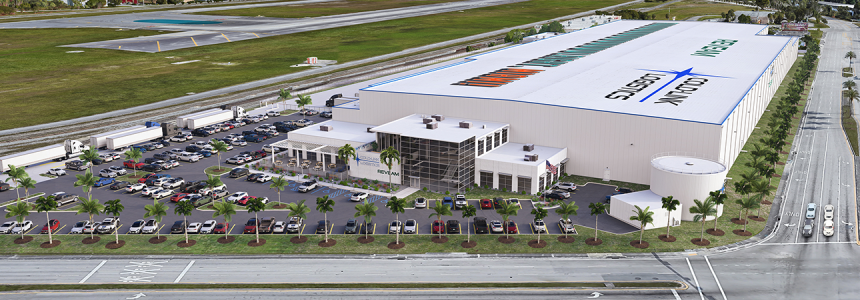
A groundbreaking ceremony for a state-of-the-art Phytosanitary Treatment and Cold Chain Processing Facility recently took place in Miami, laying the groundwork for the first of its kind center in Florida, and the largest in the U.S.
The facility will be used by PortMiami and Miami International Airport (MIA), and it’s being developed in collaboration with Mandich Group, Cold-Link Logistics and Reveam. The phytosanitary treatment portion of the facility will irradicate pests from refrigerated cargo containers and air cargo pallets, and the cold chain processing portion will provide cold storage, warehousing, distribution and other services for perishable goods.
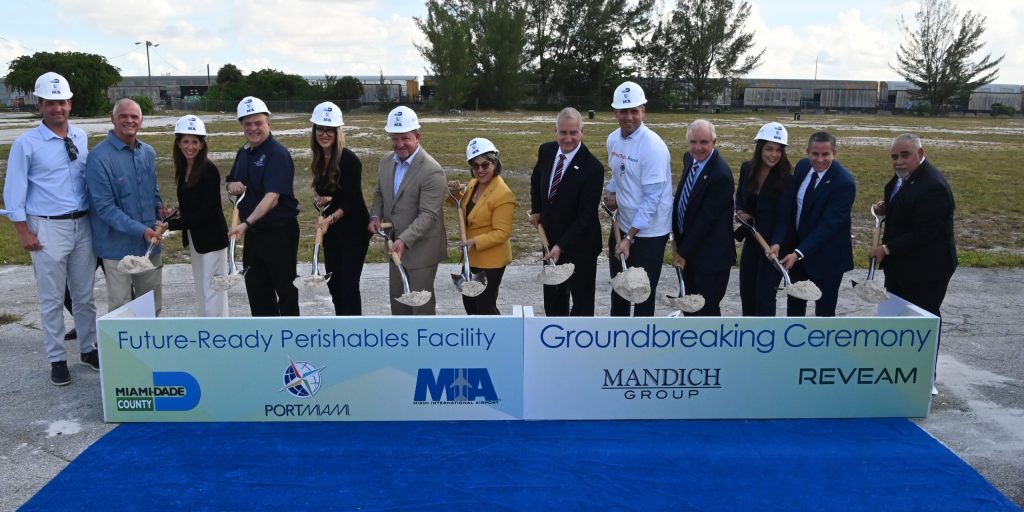
The future-ready perishables facility is estimated to costs $141 million and open in 2027. Mandich Group will contribute $98.5 million and PortMiami will provide $9 million towards the project. Additionally, PortMiami received a $33.5 million U.S. Department of Transportation Maritime Administration Federal Port Infrastructure Development Program Grant for the project.
The new facility will provide advanced treatments and inspection capabilities for imported fruits, vegetables, flowers and other plant-based and perishable items. Using U.S. Department of Agriculture certified non-chemical treatments, the center is designed to expedite inspections while enhancing protection against invasive pests and diseases that threaten U.S. agriculture.