
News & Updates
2025 SEAPORT SPOTLIGHT: Port of Palm Beach
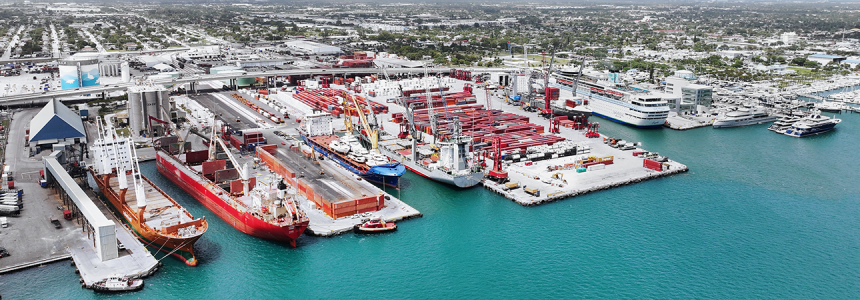
The Port of Palm Beach is a full-service, diversified landlord port located in Riviera Beach, Florida. The port and its dozens of tenants are a powerful engine for economic development and job creation, employing more than 3,800 people in the South Florida region and the state.
The Port of Palm Beach consistently ranks as the fourth busiest container port among Florida’s 16 seaports and is an important distribution center for commodities shipped all over the world, especially to the Caribbean Basin. Operations include containerized, dry bulk, liquid bulk, break-bulk, Ro/Ro, and heavy-lift/project cargoes, with food being the port’s primary export commodity. In fact, almost 80 percent of all goods passing through the port are exported, making the Port of Palm Beach one of only 16 “Export Ports” in the country. In total, the port is responsible for processing more than $14 billion in commodities, or more than 2.8 million tons of cargo.
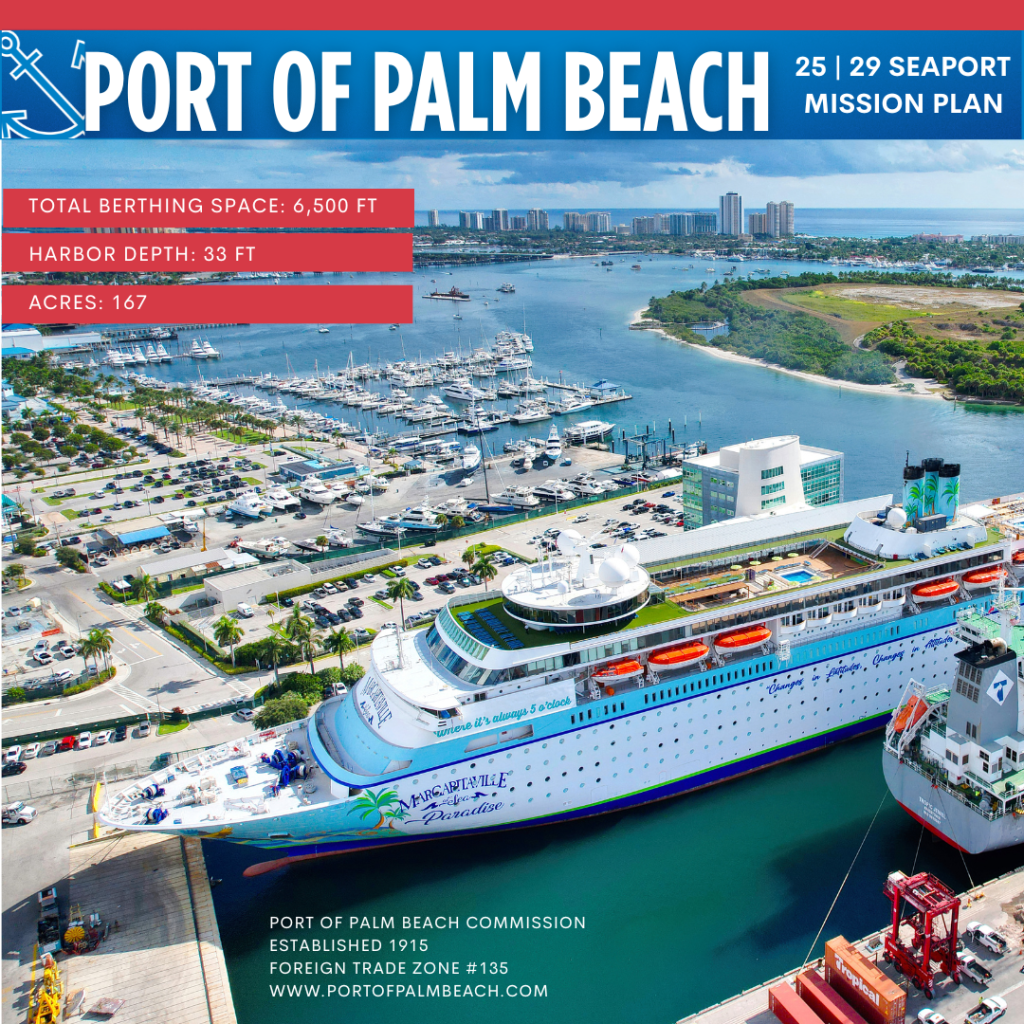
The port has three slips, 17 berths, and seven Ro/Ro ramps, and can accommodate vessels up to 700 ft. long and 100 ft. wide. The port is easily accessible from I-95, Florida’s Turnpike, and the Florida East Coast Railway (FECR), allowing for seamless, cost-effective cargo movement. The FECR provides twice-daily service to the port’s rail interchange. Offering the convenience of on-dock rail, the port owns and operates a locomotive and 6.5 miles of track. The industrial switching operation is capable of handling box, hopper and double-stack rail cars, with 24/7 operations. Rail operations can accommodate 20-axle rail cars, with a 450-ton capacity. The port’s docks are a 15-minute transit from the first sea buoy.
The Port of Palm Beach is the homeport of Margaritaville at Sea Paradise, which offers two, three and four-night sailings to Grand Bahama Island and Nassau.
The port is an independent special taxing district, a subdivision of the state of Florida, governed by five elected commissioners. The Port of Palm Beach District has statutory authority to levy ad valorem milage taxes but has not done so in more than 48 years.